
logo
Send Message


Dongguan Ritian Communication Technology Co., Ltd.

Home
Products
About Us
Factory Tour
Quality Control
Contact Us
Request A Quote
Home News

Why Machine Vision Cable Failures Cost More Than You Think

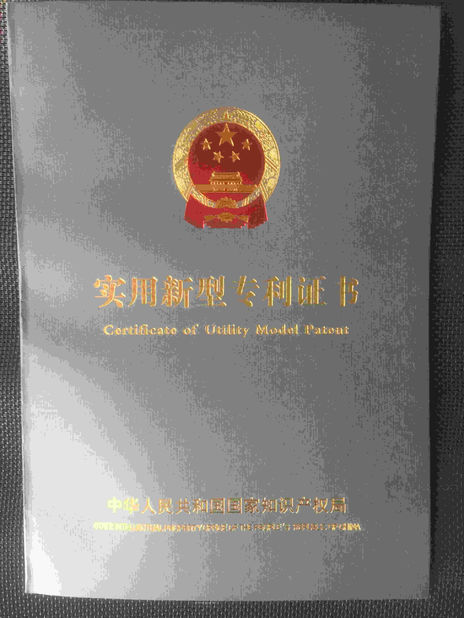
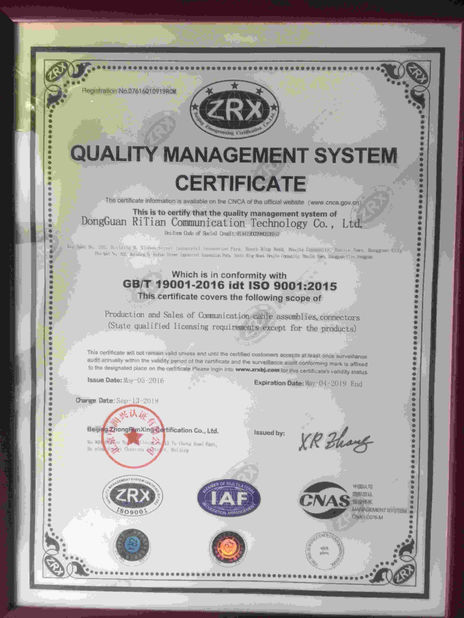
Certification
China Dongguan RitianLink Technology Co., Ltd. certification
Customer Reviews Thank you for the excellent solution. Good job!

—— Mohammad

Good quality, good price, good service Thank you very much to Excellent connectors!

—— Thiago Monzo

I'm Online Chat Now
Company News
Why Machine Vision Cable Failures Cost More Than You Think
Latest company news about Why Machine Vision Cable Failures Cost More Than You Think

Why Machine Vision Cable Failures Cost More Than You Think — And How to Stop Them

By RiTianLink | May 28, 2026


The machine vision industry is booming. The global market reached USD 13.49 billion in 2025 and is projected to hit USD 23.78 billion by 2032, growing at a CAGR of 8.43%. AI-powered visual inspection has become the #1 computer vision application in manufacturing, with 41% industry adoption. Basler just launched its GMSL embedded vision system for laboratory automation . Vadzo Imaging rolled out three new Sony-sensor cameras in a single week. Slamcore secured $14M to scale visual AI across intralogistics.


But while the industry focuses on sensors, algorithms, and AI chips, one component keeps failing silently on the factory floor — and it's not the camera.


It's the connector.
 

The Hidden Failure Point in Every Vision System


latest company news about Why Machine Vision Cable Failures Cost More Than You Think  0
(Caption: HRS-compatible aviation connector firmly mated with the rear power/trigger port of a Basler industrial camera, demonstrating secure locked connection for machine vision systems.)


Every machine vision system has one: the small circular connector at the back of the camera that carries power, trigger signals, and sometimes data. It looks simple. It isn't.
In high-volume manufacturing environments, this connector faces a gauntlet of stress factors that most engineers underestimate:


  • Vibration and shock from adjacent machinery loosening threaded connections over time
  • Cable flex fatigue from robotic arm movements and drag-chain routing
  • Contamination from oil, coolant, and metal dust on the factory floor
  • Thermal cycling between production runs and shutdowns


When a connector fails, the camera doesn't just lose signal — the entire inspection cell goes blind. One missed defect in semiconductor or automotive manufacturing can cost more than replacing every cable in the facility. Unplanned downtime in discrete manufacturing averages USD 260,000 per hour, and up to USD 2 million per hour in automotive plants.
 
Yet when teams audit vision system reliability, they typically evaluate camera resolution, lens quality, lighting design, and AI model accuracy. The connector — the physical bridge between the camera and the rest of the system — rarely makes the list until it fails.

Not All Aviation Connectors Are Created Equal

latest company news about Why Machine Vision Cable Failures Cost More Than You Think  1
(Caption: Close-up comparison of male pin and female socket versions of HRS-compatible 4/6/7/10/12-pin aviation connectors, showing gold-plated copper contacts and 360° shielded housing for industrial camera cable assemblies.)


The HRS (Hirose HR10A-series compatible) aviation connector is the de facto standard for industrial camera power and trigger interfaces. Basler, FLIR, and Sony all use this connector family on their camera rear panels. But "compatible" does not mean "identical."


Here's what separates a connector that lasts 3 months from one that lasts 3 years:
Failure Mode Cheap Connector Quality Connector
Contact plating Tin or flash gold Gold-plated copper (≥0.76µm)
EMI shielding Partial or none 360° full-shield design
Shell material Zinc alloy Nickel-plated brass
Cable strain relief Basic clamp Overmolded + collet design
Sealing No rating IP67 rated
Testing Batch sampling 100% continuity tested

The difference isn't visible in a product photo. It's visible on your production floor — in the form of intermittent triggers, ghost images, and unexplained inspection failures that disappear when you wiggle the cable.


What 100% Continuity Testing Actually Means


latest company news about Why Machine Vision Cable Failures Cost More Than You Think  2


(Caption: Quality assurance documentation showing 100% continuity testing of HRS-compatible aviation connector cable assemblies on production test bench with PASS indicator, RoHS/CE certification, and bulk packaging for volume orders.)
 
Most connector suppliers test a sample from each batch. If 50 out of 500 pass, the lot ships. This is standard industry practice — and it's how defective units end up in your production line.
 
At RiTianLink, we test every single cable assembly. Not batch sampling. Not statistical inference. Every unit gets a continuity check before it goes into the shipping carton. Here's why that matters:


A single broken solder joint inside a connector — invisible from the outside — can cause intermittent signal loss under vibration. The camera passes its power-on self-test. The AI model loads correctly. Everything looks fine until the line runs at speed, and the trigger signal drops one frame out of every thousand. In a semiconductor wafer inspection system running at 170 fps, that's a missed defect every 6 seconds.


Our testing protocol includes:


  • Pin-to-pin continuity verification on every conductor
  • Insulation resistance testing between adjacent circuits
  • Mate/unmate cycle validation to confirm contact durability
  • Visual inspection of solder joints and overmold quality


Every cable that ships carries a test record. Not a statistical estimate — a documented result for that specific serial number.
 

From Prototype to 10,000 Units: Scaling Without Compromise


One of the most common concerns we hear from OEM engineers and procurement teams goes like this: "The sample quality was great, but will the production run be the same?"


It's a valid concern. We've seen competitors deliver hand-built samples that look perfect, then ship mass-produced units with inconsistent solder joints, off-center overmolds, and mixed contact plating thickness.


latest company news about Why Machine Vision Cable Failures Cost More Than You Think  3


(Caption: Exploded assembly view of HRS-compatible aviation connector mated with Power/Trigger cable, showing internal components including gold-plated pins, gasket seal, solder joints, overmold strain relief, and cable clamp for industrial camera applications.)


Our approach is different:


  1. Same tooling, same process. The production fixtures and soldering parameters used for your 5-piece sample are the same ones used for your 10,000-piece order.
  2. Documented process control. Every production run follows a traveler document that records soldering temperature, crimp force, overmold pressure, and test results at each station.
  3. ISO 9001 quality management. Not a certificate on the wall — an active system of corrective actions, process audits, and continuous improvement.
  4. RoHS and CE certified. Full material traceability for compliance-sensitive markets including EU and North America.


We currently offer HRS-compatible aviation connectors in 4-pin, 6-pin, 7-pin, 10-pin, and 12-pin configurations, with both male (pin) and female (socket) versions. Cable assemblies are available with high-flex drag-chain rated cable, standard PVC cable, or custom specifications to match your routing requirements.

The Cost Equation: Price vs. Total Cost of Failure


Let's do the math that most procurement processes skip.
Factor Low-Cost Cable RiTiaLink Cable
Unit price (6-pin, 3m) ~$3.50 ~$8.00
Expected service life 3–6 months 18–36 months
Failure rate (first year) 8–15% <0.5%
Cost per line stoppage $2,000–$50,000 N/A
Annual replacement cost (100 units) $2,800–$7,000 $800–$1,600
A cable that costs $4.50 less per unit but causes even one unplanned line stoppage has already cost you 100× the savings. In high-value manufacturing — semiconductor, automotive, pharmaceutical — the multiplier is closer to 1,000×.


This isn't theoretical. It's the phone call our customers make when they switch: "We've had zero cable-related failures in six months."
Pub Time : 2026-05-28 16:17:02 >> News list
Contact Details
Dongguan RitianLink Technology Co., Ltd.

Contact Person: Mr. Liu

Tel: 15099965979

Send your inquiry directly to us (0 / 3000)